4 Money-Saving Hacks for Feeding Multiple Pets
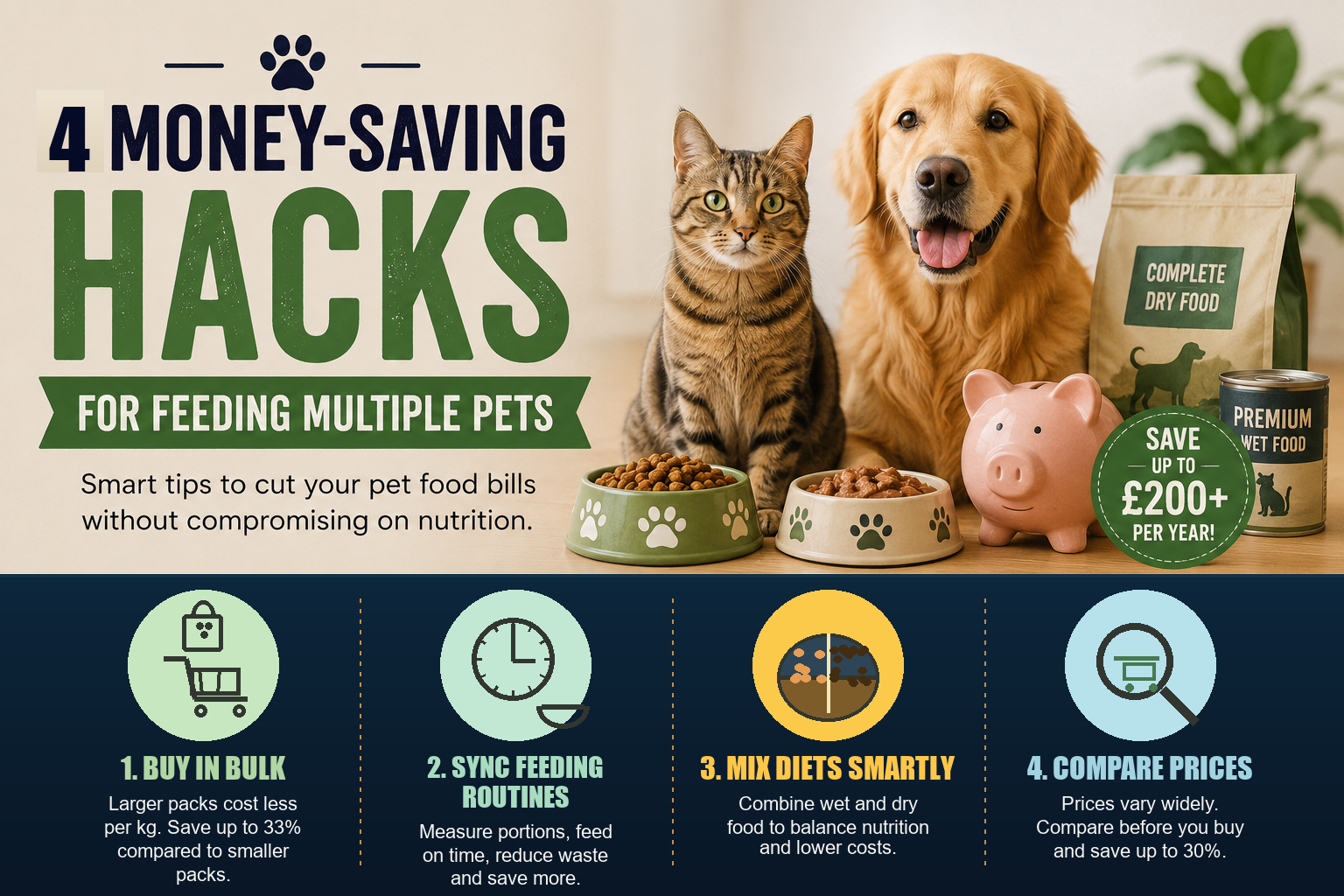
Feeding more than one pet in a household can quietly turn into one of the largest ongoing monthly expenses. When you have two cats, two dogs, or a mixed group of pets with different tastes and dietary needs, the cost tends to rise faster than expected. Many pet owners in the UK only realise this when they calculate their monthly spend after searching terms like “cost feeding two cats UK” and seeing the total add up to more than anticipated.
The reassuring part is that reducing this cost does not require lowering food quality or compromising your pets’ health. Instead, it comes down to smarter buying habits, better portion control, and making use of pricing differences in the market. With a few consistent changes, most multi-pet households can realistically reduce their annual pet food spend by a noticeable margin. Below are five practical and realistic strategies designed specifically for households feeding more than one animal.
1. Bulk Buying with a Planned Approach
One of the most reliable ways to reduce pet food costs is purchasing in larger quantities. Retailers often price bigger bags or multi-pack wet food options at a lower cost per portion compared to smaller packs. This is because packaging and distribution costs are spread over a larger volume.
To illustrate, a smaller 2kg pack of premium dry cat food might cost around £18, while a 10kg bag of the same brand could be priced near £60. Although the larger bag costs more upfront, the price per kilogram drops significantly, often by around one third. Over time, this difference becomes meaningful.
For a household with two cats, switching to bulk purchasing can reasonably reduce monthly costs by around £10 to £20, depending on the brand and feeding amount. Over a year, this can translate into savings of approximately £120 to £240.
However, bulk buying only works effectively when done carefully. Food should always be stored in airtight containers to maintain freshness, and it is important to confirm that your pets consistently enjoy the food before committing to large quantities. Expiry dates should also be checked to ensure nothing goes to waste.
2. Improving Feeding Routines to Reduce Waste
A surprisingly large portion of pet food expense comes not from purchase price but from waste and inefficient feeding habits. In households with multiple pets, it is common for food to be over-served, left uneaten, or accidentally duplicated when feeding schedules are unclear.
Creating a structured feeding routine can significantly reduce this issue. This includes giving measured portions tailored to each pet, feeding at consistent times each day, and ensuring each animal has its own designated bowl—especially important for cats who may compete for food.
Even small reductions in waste can have a noticeable financial impact. If just 10% of food is typically wasted through over-serving or leftovers, correcting this can save around £5 to £12 per month in a two-cat household. Over a year, that equates to approximately £60 to £140.
Beyond cost savings, structured feeding also supports better digestion and weight management, which can reduce long-term veterinary expenses as well.
3. Balancing Wet and Dry Food for Cost Efficiency
Another effective way to manage feeding costs is by combining wet and dry food strategically rather than relying exclusively on one type. Dry food tends to be more cost-efficient on a calorie basis, while wet food is often preferred for hydration and taste.
A practical approach used by many multi-pet households is to mix feeding types across the day. For example, wet food may be given in the morning while dry food is portioned in the evening. This helps maintain variety for the pets while keeping overall costs lower.
By shifting even around 30% of a pet’s diet from wet food to dry food (where appropriate and nutritionally balanced), households can often reduce monthly feeding costs by £10 to £25 for two cats, depending on brand selection and portion size.
It is important to make any dietary changes gradually and ensure they suit each pet’s health requirements. If there are any concerns, a vet should always be consulted before making major adjustments.
4. Comparing Prices Before Every Purchase
Perhaps the most overlooked cost-saving habit is simply comparing prices before buying. Pet food prices in the UK can vary significantly between supermarkets, online retailers, and specialist pet shops—even for the exact same product.
Using comparison platforms such as PetPrices.co.uk allows pet owners to quickly see where the best deals are available without manually checking multiple websites.
In many cases, the same product can vary in price by 10% to 30% depending on where it is purchased. For a multi-pet household, this can result in savings of over £200 per year simply by choosing the lowest-cost option consistently.
Another advantage of price comparison tools is the ability to combine items into more efficient orders. This can reduce delivery fees and help avoid multiple small purchases, which are often more expensive in the long run.
Final Thoughts
Feeding multiple pets does not have to place unnecessary strain on your household budget. While costs naturally increase with more animals, they do not have to increase inefficiently. By applying a combination of bulk buying, structured feeding routines, balanced diet planning, and consistent price comparison, most households can significantly reduce their annual pet food expenses.
The key is consistency rather than one-off savings. Small adjustments—when applied every month—add up to meaningful financial relief over time, all while keeping your pets healthy, well-fed, and happy.