How to Cut Your UK Pet Food Bill in Half (Without Sacrificing Quality)
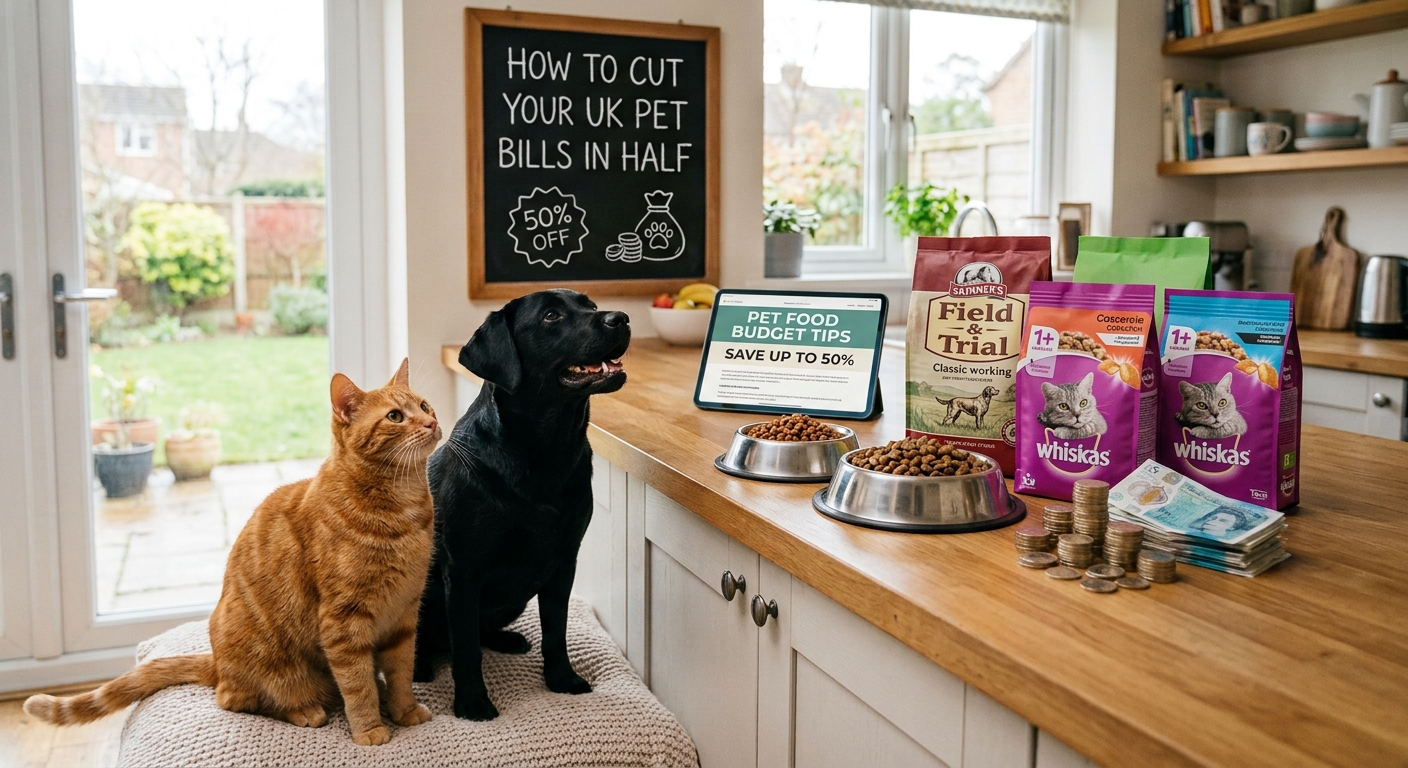
The rising cost of living has hit everyone hard, and our furry family members haven't been spared. From "petflation" on supermarket shelves to creeping subscription costs, feeding a cat or dog in the UK has never been more expensive.
But budgeting for your pet doesn't mean you have to relegate them to low-quality, filler-heavy diets. Here at PetPrices, we spend all day tracking UK pet food costs, and we have proven that changing how and where you shop can dramatically lower your weekly expenses while keeping your pet in peak health.
Here are five proven, money-conscious strategies to slash your pet food bill today.
1. Stop Shopping at Supermarkets
(The Convenience Tax)
The easiest trap to fall into is picking up your pet food during your weekly shop at major supermarkets. Convenience comes with a heavy markup.
Specialist online retailers like PetPlanet, Pets at Home, and PetShop regularly undercut standard supermarket prices on major brands like Whiskas, Pedigree, and Royal Canin. Supermarkets rarely stock the large bulk sizes that offer the true value per kilogram, meaning you pay a premium for smaller, less efficient packaging.
2. Master the "Cost Per 100g" Calculation
When trying to save money, most pet owners look at the total price on the sticker. This is a mistake. To find the genuine bargain, you must look at the unit price (usually broken down as price per 100g or price per kg).
Buying a 2.5kg bag of kibble might feel cheaper at the checkout than buying a 15kg bag, but the bulk option almost always offers a massive discount over time.
Dry Dog Food Unit Price Comparison (Example)
Brand & Variant Bag Size Retail Price 100g Price
Skinners Chicken 2.5kg £7.39 29.5p
Skinners Chicken 15kg £22.49 15p
Budgeting Tip: Opting for the larger bulk bag in this scenario saves you nearly 50% per meal. Just ensure you store the excess kibble inside its original bag inside an airtight plastic bin to preserve freshness and prevent fat oxidation.
3. Look for "Working Dog" Formulas
(The VAT Loophole)
Did you know that standard pet food in the UK is subject to a 20% VAT rate, but "working dog" food is officially classified as VAT-free?
Many premium UK brands offer dedicated working dog lines. These formulas are functionally identical to standard adult maintenance kibble, packed with high-quality proteins, but they cost significantly less simply because they lack the 20% government tax. If you have an active family dog, switching to a VAT-free formula is an instant win for your wallet.
4. Map Out the Pouches vs. Cans Wet Food Math
If your cat or dog strictly prefers wet food, feeding them individual pouches is one of the fastest ways to drain your bank account. Pouches require sophisticated, single-use plastic packaging which drives manufacturing costs sky-high.
Instead, switch to traditional tin cans or larger trays. Buying 400g cans of wet food and covering them with a reusable silicone lid in the fridge is roughly 40% cheaper than buying the exact same brand and recipe packaged into individual 85g pouches.
5. Use Independent Price Comparison Tools
Prices across UK pet retailers fluctuate daily based on flash sales, clearing stock, and multi-buy promotions. Manually checking five different websites every time your pet runs low on kibble is exhausting.
Using an independent pet product price aggregator allows you to search for your specific brand—whether it’s a premium veterinary diet like Hill’s Science Plan or an affordable standard like James Wellbeloved—and view live pricing rankings across trusted UK suppliers instantly.
Before you checkout on your next order, take ten seconds to run the product through a price checker. Those few clicks can easily save you £5 to £15 per order.
The Bottom Line
Budgeting for your pet isn't about cutting corners on their nutrition; it's about shopping smarter. By purchasing larger bulk sizes, leveraging independent comparison tools, and utilising VAT-free formulas, you can comfortably keep your pet well-fed without breaking your household budget.
Ready to see how much you can save?
Don't overpay for your next bag or box of pet food. Use our free tool to scan the best deals across the UK today.
Compare Dog Food Prices Compare Cat Food Prices
Published by the PetPrices Team 2026